
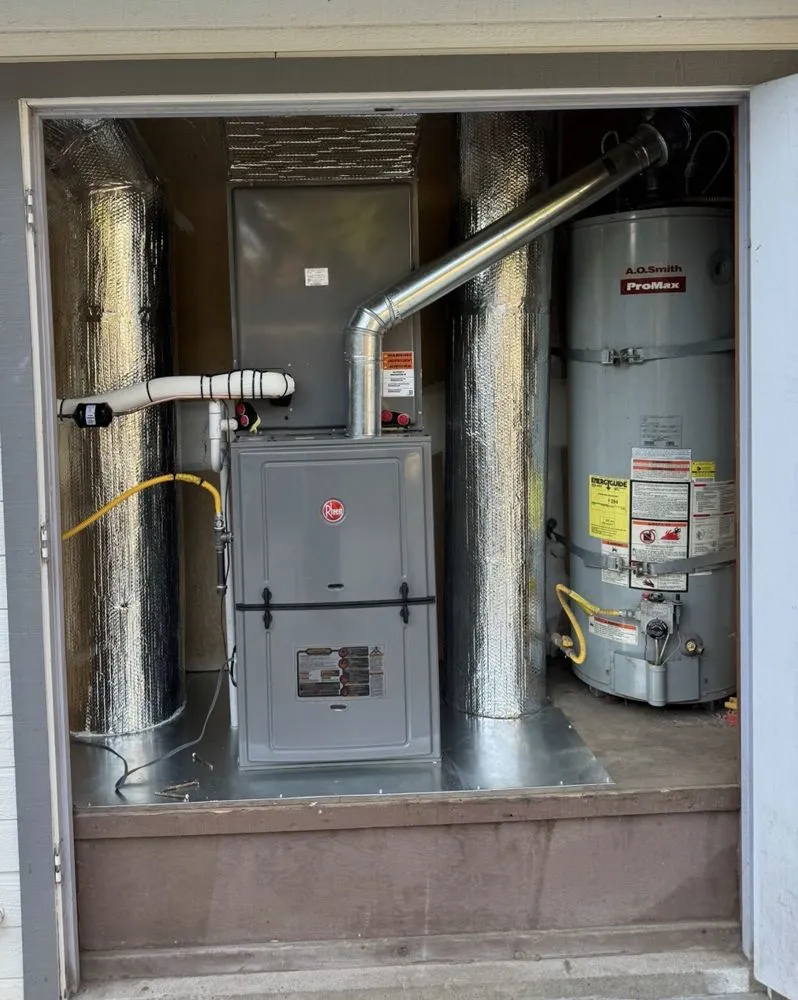
Furnace Installation in Ceres, CA
Mistakes That Shorten a New Furnace's Life (and How We Avoid Them)
Guessing at the Size Instead of Calculating It
It’s tempting to just install a furnace that matches the old one’s output, but “it worked before” isn’t the same as “it was sized correctly.” An oversized furnace heats the house quickly and then shuts off, cycling on and off more often than it should — which adds wear and actually leaves the house feeling less evenly heated. An undersized furnace runs constantly and still struggles to keep up on the coldest mornings.
Problems Short an incorrectly sized furnace can cause:
- cycling that wears out components faster
- Rooms that heat unevenly
- Higher monthly gas bills
- More strain on the blower motor
- Reduced comfort throughout the home
We calculate your home’s actual heating load based on square footage, insulation, window exposure, and ceiling height, rather than assuming the old equipment was right to begin with.
Ignoring the Existing Ductwork
Problems Short an incorrectly sized furnace can cause:
- Leaking duct joints
- Crushed or damaged duct sections
- Restricted airflow
- Undersized duct runs
- Rooms that consistently heat unevenly
We evaluate your ductwork as part of every installation and flag anything that needs attention before it undermines the new system’s performance.
Ignoring the Existing Ductwork
Furnace efficiency is measured by AFUE — Annual Fuel Utilization Efficiency — which tells you what percentage of the fuel burned actually turns into heat for your home rather than escaping up the flue. A standard-efficiency furnace runs around 80% AFUE, while high-efficiency condensing furnaces reach 95% or higher. That difference isn’t just a number on a spec sheet — it changes what the installation itself requires.
- Lower fuel consumption
- Better long-term operating costs
- Improved heating efficiency
- Different venting requirements
- Greater value for homeowners planning to stay long term
Condensing furnaces vent through PVC pipe rather than a traditional metal flue and produce condensate that needs to drain properly, so the installation has real differences depending on which efficiency tier you choose.
Skipping the Combustion and Venting Checks
A furnace that’s installed but never properly tested for combustion and venting is a furnace nobody has verified is actually safe to run long-term.
Every furnace installation includes:
- Gas pressure testing
- Combustion analysis
- Venting verification
- Safety control testing
- Final performance checks
Every installation we complete includes a combustion analysis and a check that exhaust gases are venting correctly — not just a confirmation that the burners light.
What Furnace Efficiency Ratings Actually Mean for Your Bill
Higher AFUE means less wasted fuel, which shows up directly on your gas bill over the life of the system. The tradeoff is upfront cost — high-efficiency condensing furnaces cost more to install than standard-efficiency models, partly because of the different venting requirements. Whether that upfront cost pays for itself depends on how much you run the furnace, current gas prices, and how long you plan to stay in the home.
| Standard-Efficiency | High-Efficiency (Condensing) |
AFUE Rating | ~80% | 95%+ |
Venting | Standard metal flue | PVC pipe, condensate drain |
Upfront Cost | Lower | Higher |
Best Fit | Lower gas usage, tighter budget | Furnace runs often, longer ownership timeline |
We’ll walk through the real numbers for your situation rather than assuming the highest efficiency tier is automatically the right call for every homeowner.
Furnace Types We Install
Single-stage furnaces run at one output level — full blast or off — and remain a reliable, lower-cost option for many homes. Two-stage furnaces can run at a lower output for milder days and ramp up only when needed, which tends to mean steadier temperatures and quieter operation. Variable-speed or modulating furnaces adjust output more precisely still, offering the most even heat but at a higher upfront cost. We’ll talk through which tier actually makes sense for your home and budget rather than defaulting to the most expensive option.

What Installation Day Looks Like
Expert Tip
Many homeowners assume replacing the furnace alone will solve uneven heating. In reality, airflow problems often come from leaking or undersized ductwork. That’s why we inspect the entire heating system before recommending new equipment.
Why Homeowners Trust Our Furnace Installations
Proper System Sizing
Every furnace recommendation is based on your home's actual heating requirements—not simply the size of the old equipment.
Complete Airflow Evaluation
We inspect ductwork, airflow, and venting to help your new furnace perform the way it's designed.
Safety Comes Standard
Every installation includes gas pressure testing, combustion analysis, and venting verification before the system is placed into service.
Straightforward Recommendations
We'll explain efficiency options, operating costs, and equipment choices clearly so you can make an informed decision.
Frequently Asked Questions
How much does furnace installation cost in Ceres, CA?
What size furnace do I need for my house?
Is a high-efficiency furnace worth the extra cost?
Will my existing ductwork work with a new furnace?
How long does furnace installation take?
What's the difference between single-stage, two-stage, and variable-speed furnaces?
Do you handle the gas line and venting as part of installation?
How do I know if I need furnace repair or full replacement?
Age and repair history are the main factors — our furnace repair page covers what we check during a repair call and when replacement starts to make more financial sense.
Get a Furnace Installed Right the First Time
A new furnace should mean fewer problems, not new ones a year in. Contact United Heating and Air to schedule a furnace installation estimate in Ceres, CA, and get equipment that’s sized, vented, and installed correctly from day one.