

Emergency HVAC Service in Ceres, CA
When Does an HVAC Problem Become an Emergency?
Not everything that goes wrong with a heating or cooling system needs same-day attention, but a few situations genuinely shouldn’t wait:
- Your AC has stopped cooling entirely during extreme summer heat
- Your furnace won't produce any heat during cold weather
- The system keeps tripping the circuit breaker
- You notice a burning smell from the indoor or outdoor equipment
- The outdoor unit is grinding, banging, or screeching
- Water is leaking heavily around the indoor equipment
- The thermostat is calling for heat or cooling and nothing responds
- The system shut down on its own and won't restart
What You Can Safely Check Before Calling
A handful of heating and cooling problems have simple causes you can rule out yourself in a couple of minutes:
- Thermostat is set to Heat or Cool, not accidentally left on Fan Only
- The temperature setting is actually above or below the room temperature
- The breaker for the HVAC system hasn't tripped
- The air filter isn't so clogged it's choking airflow
- Supply and return vents aren't blocked by furniture or rugs
- The furnace's service switch wasn't accidentally flipped off
If your system has been missing regular HVAC maintenance, a seasonal inspection can often catch many of these issues before they become emergency breakdowns.
Emergency Cooling Problems We Commonly Repair
Emergency Heating Problems We Commonly Repair
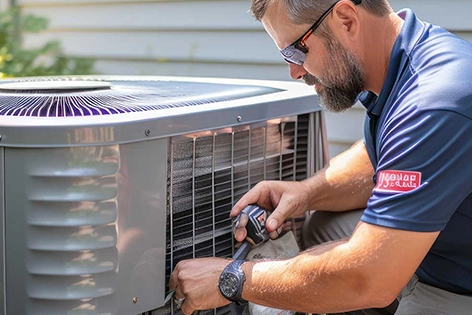
What Happens During an Emergency HVAC Visit
Our first priority is finding out why the system stopped working—not guessing based on the symptoms.
Every emergency visit typically includes:
Thermostat testing
Electrical system inspection
Airflow evaluation
Safety control testing
Refrigerant evaluation (cooling systems)
Ignition and combustion inspection (heating systems)
Temperature and pressure verification
Performance testing after repairs are completed
Once we’ve identified the problem, we’ll explain what failed, discuss your repair options, and provide clear pricing before work begins.
Preventing the Next Emergency HVAC Breakdown
Most major breakdowns don’t come out of nowhere — a strange noise, a longer cooling cycle, weaker airflow, or a climbing bill are usually early warnings that show up weeks or months before the system actually quits. A seasonal tune-up is where we tend to catch those warning signs while they’re still cheap to fix: a weak capacitor, a coil that’s starting to get dirty, a refrigerant leak that’s just getting started, a connection that’s worked loose but hasn’t caused a failure yet.

Repair or Replace During an Emergency?
Why Homeowners Choose United Heating and Air for Emergency HVAC Service
Priority Scheduling.
A complete loss of heating or cooling gets bumped to the front of the line whenever our schedule allows it.
Real Diagnosis, Not Guesswork.
We find the actual cause before recommending a repair, so you're not paying to replace a part that wasn't the problem.
Straight Answers.
You'll know what failed, what your options are, and what it costs before any work starts.
Comfortable With Both Sides of the System.
The same step-by-step approach applies whether it's the AC or the furnace that's down.
Honest, Either Way.
If repair is the right call, that's what we'll say. If replacement genuinely makes more sense, we'll show you why.
Frequently Asked Questions
How quickly can you respond to an emergency HVAC call in Ceres?
Do you offer after-hours emergency HVAC service?
Should I turn my HVAC system off if it's making loud noises?
My AC stopped cooling. Should I keep running it?
My furnace smells like gas. What should I do?
Can most emergency HVAC repairs be completed the same day?
Will emergency service cost more?
How can I reduce the chance of another emergency breakdown?
Get Fast Help When Your HVAC System Stops Working
Whether you’ve lost cooling in the middle of a Central Valley heat wave or the furnace has gone quiet on a cold morning, contact United Heating and Air for emergency HVAC service in Ceres, CA, and get a real diagnosis and a clear plan to get things running again.